When a foot wound is not healing, routine wound care may no longer be enough.
A foot wound may begin as something routine.
- A diabetic ulcer.
- A surgical incision that opened.
- A heel wound.
- A workplace injury below the ankle.
- A small wound that keeps draining.
- A wound that looked manageable but is not closing.
Standard wound care, podiatric care, offloading, dressing changes, antibiotics, and close follow-up are often appropriate first steps.
But when a foot wound stalls, deepens, reopens, exposes tendon or bone, threatens hardware, delays walking, or raises concern for infection or amputation, the problem may have changed category.
It may be a soft-tissue reconstruction problem.
For work-related foot wounds, especially below the ankle, local reconstructive review may be appropriate before the patient is sent out of the area.
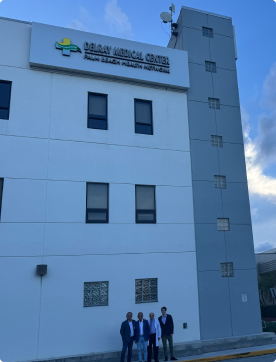
Delray Advanced Wound Center provides local plastic surgeon-led evaluation for complex foot wounds, work-related foot injuries, and below-ankle soft tissue problems in Palm Beach County.
We treat the wound in front of us – whether it is a small wound disrupting your life or a complex injury requiring advanced reconstruction.
Call Delray Advanced Wound Center: (561) 495-3412
You do not need to decide whether it is “serious enough.”
Patients, families, and injured workers are often placed in an impossible position.
- You are told to wait.
- You are told to continue dressings.
- You are told the wound needs more time.
- You may be told to travel to another city for evaluation.
Sometimes continued wound care is correct.
Sometimes outside referral is clinically appropriate.
But sometimes the wound has changed category.
A foot wound that is not healing may involve pressure, poor circulation, infection risk, exposed tendon, exposed bone, hardware, fragile skin, diabetes, neuropathy, swelling, traumatic tissue loss, or failed surgical closure.
The question becomes: Has a plastic surgeon reviewed the soft tissue problem?
When to ask for plastic surgeon-led wound review
The foot wound is not meaningfully improving
The wound keeps reopening
Tendon, bone, joint, plate, screw, or hardware is visible or threatened
There is black tissue or progressive tissue loss
The wound is draining, deepening, or developing odor
Infection has required repeated antibiotics, ER visits, hospitalization, or debridement
The patient has diabetes, neuropathy, vascular disease, swelling, anticoagulation, or fragile skin
The wound is preventing walking, therapy, work, or shoe wear
A prior closure, graft, or wound plan has failed
Amputation has been mentioned
The wound is part of a workplace injury and healing is delaying function, mobility, or return to work
The patient is being sent out of the area before local reconstructive evaluation
You do not need to diagnose the problem yourself.
That is what the evaluation is for.
If several warning signs are present, request reconstructive wound review before the wound progresses further.
Call Delray Advanced Wound Center: (561) 495-3412
Why background matters in a complex foot wound
Many foot wounds begin appropriately with podiatric care, primary care, vascular care, orthopedics, emergency care, or standard wound management.
That is often the right starting point.
But when a foot wound is not healing, keeps reopening, exposes tendon or bone, threatens hardware, or raises concern for infection or amputation, the problem may have changed category.
At that point, the wound is no longer only a foot-care problem.
It may be a soft-tissue reconstruction problem.
Plastic surgeons are specifically trained in wound closure, tissue movement, grafting, flap coverage, traumatic soft-tissue injury, exposed-structure coverage, failed surgical wounds, fragile tissue, and reconstructive escalation decisions.
When a wound becomes difficult enough that other surgical teams need help closing, protecting, or salvaging it, plastic surgery is often the reconstructive specialty brought in.
That does not make every wound a plastic surgery problem.
But it does mean that a foot wound with failed healing, exposed structures, tissue loss, or limb-salvage concern deserves that perspective.
That distinction matters when the wound requires durable soft-tissue planning beyond routine wound management.
Delray Advanced Wound Center provides plastic surgeon-led evaluation for complex foot and lower-extremity wounds, supported by hospital-based trauma reconstruction experience, university faculty involvement, peer-reviewed academic work, and national/international presentation in complex wound and reconstructive surgery.
The goal is not to replace appropriate foot care.
The goal is to make sure the reconstructive problem has been recognized before options narrow.
Work-related foot wounds and below-ankle injuries
Workplace foot injuries can be deceptively serious.
A crush injury, laceration, avulsion, degloving injury, open fracture, exposed tendon, exposed bone, hardware exposure, or postoperative wound breakdown below the ankle can threaten walking, shoe wear, return to work, and long-term function.
These injuries often require more than routine wound care.
They may require reconstructive leadership.
In work-related lower-extremity injuries, especially below the ankle, early plastic surgeon-led review can help determine whether the wound is a simple healing problem or a soft-tissue reconstruction problem.
That distinction matters.
The foot has limited soft tissue reserve. Wounds below the ankle must tolerate pressure, swelling, footwear, weight-bearing, shear forces, and repeated motion. A closure that looks acceptable early can fail if the underlying tissue, perfusion, pressure, or exposed-structure problem has not been addressed.
Plastic surgery involvement may help coordinate:
Soft tissue viability assessment
Exposed tendon, bone, joint, or hardware coverage
Debridement and staged reconstruction planning
Coordination with podiatry, orthopedics, vascular surgery, infectious disease, therapy, and wound care
Durable closure strategy
Functional recovery planning
Return-to-work trajectory when appropriate
For complex workplace foot injuries, the plastic surgeon often functions as the reconstructive coordinator for the soft-tissue problem.
That does not replace other specialists.
It helps align them around the central reconstructive question: Can the wound be stabilized in a way that preserves durable function?
The referral decision should be clinical – not merely administrative
Work-related foot wounds are sometimes routed outside the patient’s local community through network pathways, contracted provider arrangements, or administrative referral systems.
Some outside referrals are clinically appropriate.
But when a work-related foot wound involves failed healing, exposed tendon, exposed bone, hardware exposure, traumatic tissue loss, infection concern, or below-ankle functional risk, the referral decision should be based on the clinical needs of the wound.
Not merely on network routing.
Not merely on distance.
Not merely on administrative convenience.
Not on cost considerations without a clear clinical reason.
If local plastic surgeon-led reconstructive wound evaluation is available, it is reasonable to ask why the patient is being sent elsewhere before that evaluation occurs.
The question is not confrontational.
It is clinical:
What is the medical reason this complex foot wound cannot be evaluated locally first?
Has a plastic surgeon reviewed the soft tissue problem?
Who will be responsible for reassessment if the wound worsens, reopens, or exposes tendon, bone, joint, or hardware?
Will distant care make wound surveillance, therapy coordination, and follow-up more difficult?
A distant referral may be appropriate when required expertise is not available locally or when the clinical circumstances require it.
But when local reconstructive expertise exists, bypassing it should have a clear clinical reason.
For injured workers, this matters.
A below-ankle wound must tolerate standing, walking, shoes, pressure, swelling, therapy, job demands, and time.
A wound that appears closed but cannot withstand real function has not truly healed.
Delray Advanced Wound Center provides local plastic surgeon-led evaluation for complex foot wounds, work-related foot injuries, and below-ankle soft tissue problems in Palm Beach County.
Call Delray Advanced Wound Center: (561) 495-3412
Foot wound problems evaluated
Diabetic foot wounds that are not healing
Diabetic foot wounds can be deceptive. Neuropathy, pressure, swelling, infection risk, and circulation problems may hide the true severity of the wound.
A wound that looks small can still threaten deeper structures.
Reconstructive review may help determine whether the wound remains appropriate for routine wound care or whether additional planning is needed.
Postoperative foot and ankle wound breakdown
Incisions after foot or ankle surgery can open because of tension, swelling, impaired perfusion, infection, hardware, or fragile soft tissue.
When breakdown occurs near tendon, bone, joint, or hardware, early reconstructive review matters.
Exposed tendon, bone, joint, or hardware
Once deeper structures are exposed or threatened, the wound is no longer just a dressing problem.
Durable coverage may require reconstructive planning, debridement, vascularized tissue coverage, infection control, or staged reconstruction when appropriate.
Heel wounds and pressure wounds
Heel wounds are difficult because the heel must tolerate standing, walking, pressure, swelling, and shoe wear.
A heel wound that is worsening or not closing deserves careful review before options narrow.
Traumatic foot wounds
Crush injuries, avulsions, lacerations, degloving injuries, and open fractures may create tissue loss that is more complex than it appears at first.
The goal is not just closure.
The goal is durable healing and preserved function.
Fragile-skin and geriatric foot wounds
Older patients may have thin skin, anticoagulation, swelling, vascular disease, and limited tissue reserve.
Small wounds can become prolonged wound problems if tissue viability is underestimated early.
Questions to ask before being sent out of the area
If you are being referred outside Palm Beach County for a work-related foot wound, consider asking:
Has a plastic surgeon reviewed the soft tissue problem?
Is there exposed tendon, bone, joint, or hardware?
Is the wound failing because of pressure, circulation, infection, or tissue loss?
Is local reconstructive wound evaluation available?
What is the clinical reason the wound needs to be treated out of the area?
Who will manage follow-up if the wound worsens or reopens?
Who is coordinating podiatry, orthopedics, vascular care, wound care, therapy, and reconstruction?
A distant referral may be appropriate in some cases.
But for complex foot wounds, especially below the ankle, local reconstructive review may help prevent fragmented care.
Local wound reconstruction in Delray Beach
Delray Advanced Wound Center provides a local pathway for complex foot wounds in Delray Beach, Boca Raton, Boynton Beach, Lake Worth, Palm Beach County, and the surrounding region.
Evaluation may help clarify:
Is the wound still appropriate for routine wound care?
Is blood flow adequate?
Is pressure control sufficient?
Are tendon, bone, joint, or hardware threatened?
Is infection controlled?
Is surgery needed?
Is limb salvage still realistic?
What follow-up is needed to confirm durable healing?
Is there a clinical reason the patient needs distant care before local reconstructive review?
Early review may preserve options.
Delay can narrow them.
What the evaluation may include
Depending on the wound, evaluation may include:
Review of wound history and prior treatment
Assessment of wound depth, tissue viability, drainage, and exposed structures
Review of diabetes, neuropathy, vascular disease, swelling, anticoagulation, and other healing risks
Offloading and pressure-control assessment
Coordination with vascular evaluation when circulation is a concern
Infection-risk review
Debridement planning when needed
Advanced wound care selection
Operative reconstruction planning when appropriate
Follow-up surveillance to confirm durable healing
Coordination with podiatry, orthopedics, vascular surgery, infectious disease, therapy, and wound care when needed
Some wounds need better pressure control.
Some need debridement.
Some need vascular evaluation.
Some need grafting, flap coverage, or staged reconstruction.
Some need hospital-based escalation.
The first step is identifying the true category of the wound.
Local wound reconstruction in Delray Beach
Ask one simple question: Has a plastic surgeon reviewed the wound?
That question is reasonable when a wound is not healing, getting deeper, exposing tendon or bone, recurring after closure, or raising concern for infection, hospitalization, amputation, delayed work recovery, or distant referral.
You are not creating conflict.
You are asking whether the reconstructive problem has been evaluated.
For referring physicians, podiatrists, and wound clinicians
Delray Advanced Wound Center accepts evaluation requests for complex foot and lower-extremity wounds requiring reconstructive review.
Referral may be appropriate for:
Non-healing diabetic foot wounds
Postoperative foot or ankle wound breakdown
Exposed tendon, bone, joint, or hardware
Traumatic soft tissue loss
Failed closure or recurrent breakdown
Fragile-skin wounds in older patients
Below-ankle workplace injuries
Wounds requiring staged reconstruction or escalation planning
The goal is coordinated care, not disruption of appropriate ongoing management.
For case managers, employers, adjusters, and work injury coordination
A work-related foot wound can prolong disability when the underlying reconstructive issue is not clearly identified early.
This is especially true below the ankle, where soft tissue loss, exposed structures, pressure, swelling, shoe wear, and weight-bearing demands can determine whether the wound truly heals.
A plastic surgeon-led wound evaluation may help clarify:
Whether the wound is progressing appropriately
Whether tendon, bone, joint, or hardware is exposed or threatened
Whether the wound requires reconstructive planning rather than routine wound care alone
Whether vascular, orthopedic, infectious disease, therapy, or wound care coordination is needed
Whether durable closure is realistic with the current plan
Whether local reconstructive evaluation is available before distant referral is pursued
Whether the wound is delaying mobility, therapy, work status, or durable recovery
The goal is clinical clarity, coordinated specialty care, and durable recovery planning.
For complex workplace foot injuries, the question is not only whether the wound can close.
The question is whether it can stay closed under walking, shoes, pressure, swelling, work demands, and time.
If a foot wound is not healing, worsening, recurring, exposing deeper structures, delaying work recovery, or raising concern for infection, hospitalization, amputation, or distant referral, reconstructive wound review may be appropriate.
Call for evaluation
Call Delray Advanced Wound Center: (561) 495-3412
For urgent limb-threatening hospital transfer or trauma-related escalation: Tenet Transfer Center: 855-952-(PBHN) 7246
For medical emergencies, call 911 or go to the nearest emergency department.
FAQ
Review is reasonable when the wound is not healing, keeps reopening, exposes tendon or bone, threatens hardware, has uncertain blood supply, or may need durable tissue coverage rather than routine dressing care.
No. Podiatric care is often appropriate for routine foot problems and many foot wounds. This pathway is for wounds that are not progressing, are structurally complex, or may need reconstructive escalation.
A foot wound becomes complex when healing depends on more than surface closure. Perfusion, pressure, infection risk, exposed structures, tissue loss, diabetes, neuropathy, and failed prior closure can all make the wound more complex.
Plastic surgery training is directly relevant when the wound involves soft tissue loss, exposed tendon, exposed bone, exposed hardware, fragile tissue, traumatic tissue loss, failed closure, grafting, flap coverage, or reconstructive escalation decisions.
No. Evaluation may be appropriate for diabetic wounds, postoperative wound breakdown, traumatic wounds, heel wounds, exposed tendon or bone, hardware-related wounds, work-related foot injuries, and fragile-skin wounds in older patients.
Local evaluation may support continuity, easier follow-up, therapy coordination, wound surveillance, and timely reassessment if the wound changes. When local reconstructive expertise is available, the clinical reason for sending the patient elsewhere should be clear.
Ongoing treatment may be appropriate. But if the wound is worsening, stalled, deepening, reopening, threatening function, or being routed elsewhere before reconstructive review, early evaluation may preserve more options.
No. Review helps determine the correct level of care. Some wounds need nonoperative wound management. Others may need debridement, vascular coordination, grafting, flap coverage, or staged reconstruction when appropriate.
Ask whether a plastic surgeon has reviewed the soft tissue problem, whether local reconstructive evaluation is available, what clinical reason requires distant care, and who will coordinate follow-up if the wound worsens or reopens.